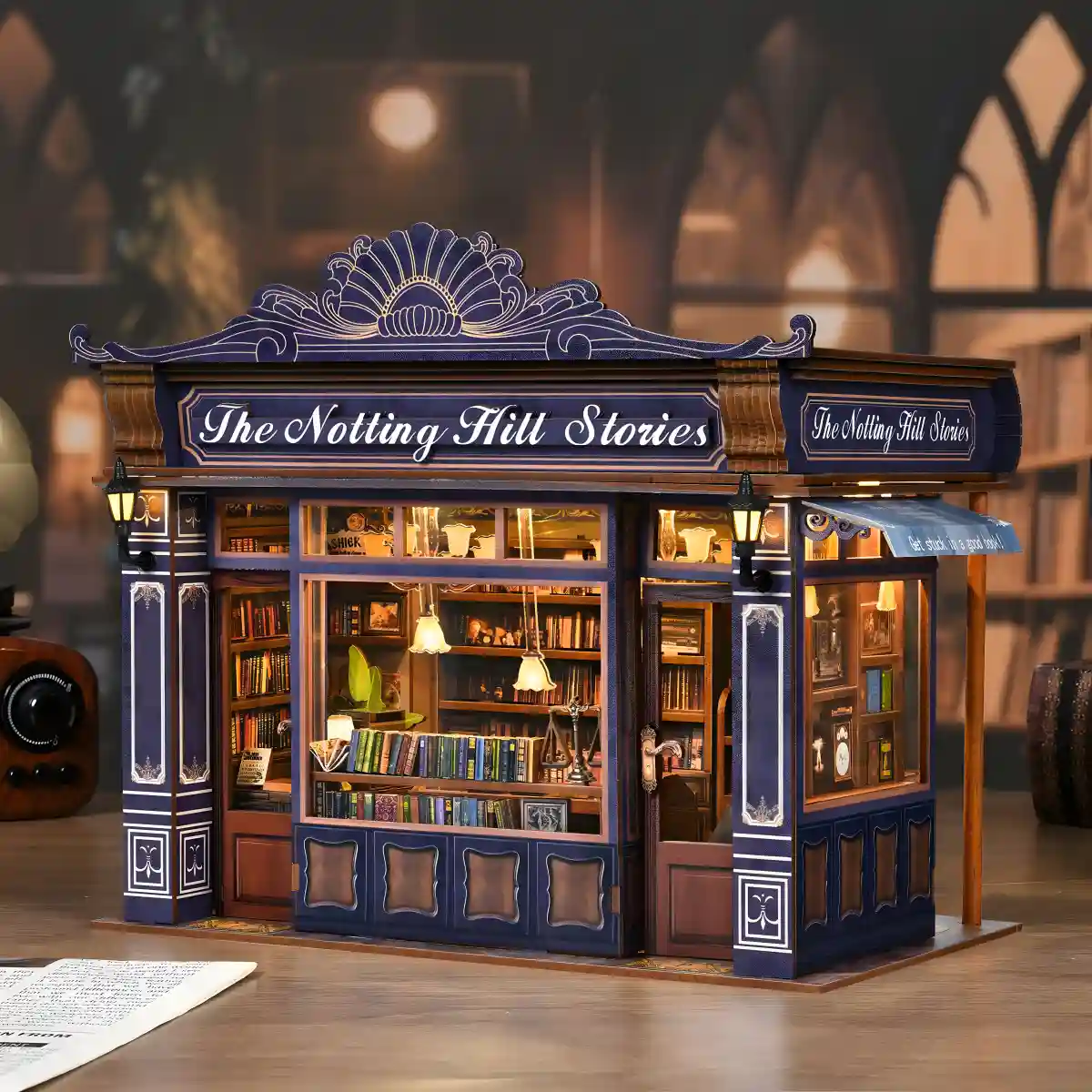
Why Tiny Worlds Hold Such Power
From dollhouses to model trains to modern Book Nook kits, miniature worlds have fascinated humans for centuries.
But why?
Why do we feel that strange sense of comfort when we peer into a tiny alley lit by glowing windows?
Why does building a miniature scene bring peace that scrolling or buying never could?
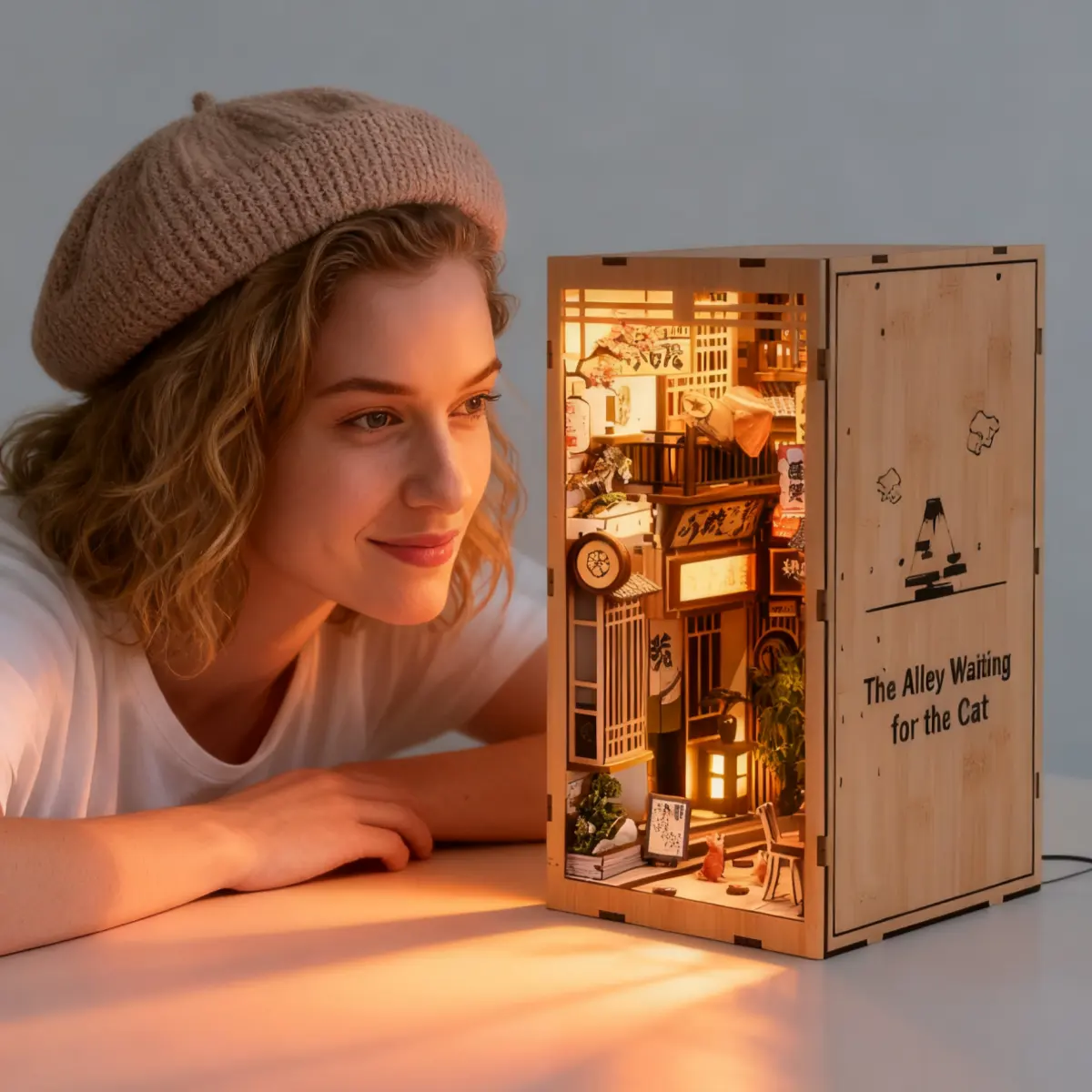
Miniature crafting is not a coincidence of aesthetics — it is a psychological phenomenon.
Tiny worlds make us feel safe, seen, and in control.
They allow us to enter a universe that is both ours and not ours — a place where imagination is contained yet infinite.
This article explores the deep psychological drivers behind why we love building Book Nooks and miniature dioramas, and why this love is far more universal and instinctive than we think.
🔍 The Four Core Psychological Needs Book Nooks Fulfill
Psychologists have long argued that human satisfaction is built upon four key internal needs:
Control
Identity
Meaning
Connection
Book Nook crafting uniquely satisfies all four — which is why it feels so rewarding, even if we cannot explain why.
Below, we explore each one.
1️⃣ The Need for Control — A Safe World in the Palm of Your Hand
In real life, we control very little.
But a miniature world is different.
We decide where the streetlamp goes.
We choose when the tiny storefront lights turn on.
We determine what story this scene is telling.
This feeling is not trivial — it is a reclaiming of agency.
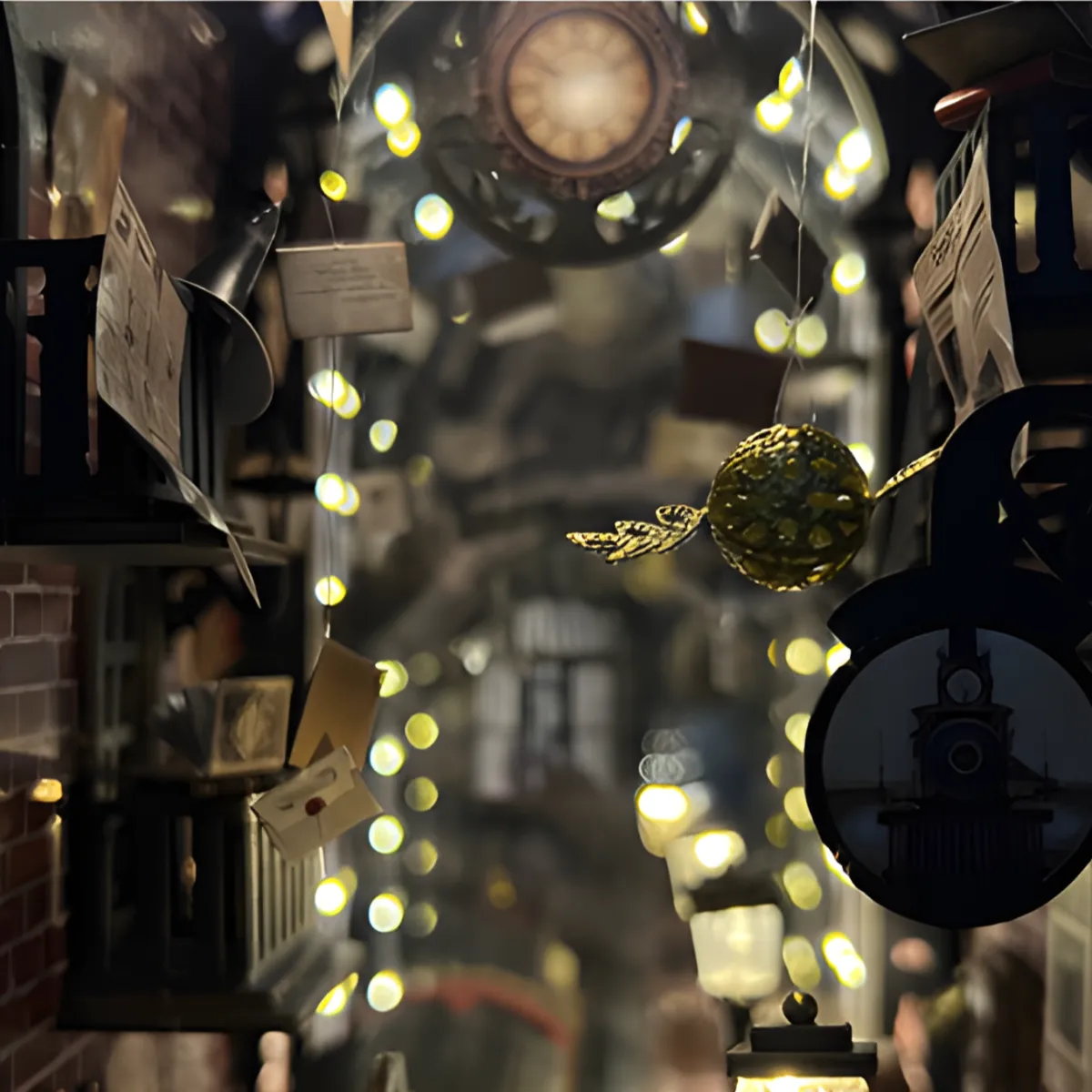
Psychologists call this “micro mastery”: the emotional satisfaction of being able to fully shape a small world when the real world feels unmanageable.
Miniature crafting allows us to finally say:
“Here, things make sense.
Here, I decide what happens.”
It is not escapism — it is containment.
A world small enough to understand, yet rich enough to feel alive.
2️⃣ The Need for Identity — A Quiet Mirror of Who We Are
Look closely at someone’s Book Nook, and you will learn their story.
Some create magical wizard alleys.
Some recreate 19th-century European bookstores.
Some build neon-lit cyberpunk streets.

These choices are not random — they are identity in physical form.
Modern psychology confirms:
We make things not only to own them, but to recognize ourselves within them.
This also explains why a mass-produced decorative object never brings the same joy as something we built — because our identity is not represented in it.
A Book Nook is not just décor.
It is autobiography — written in wood, light, and silence.
3️⃣ The Need for Meaning — Craft as Meaning-Making
Humans are meaning-making creatures.
We search for purpose even in leisure — and miniature crafting gives us exactly that.
Unlike passive entertainment, crafting creates a narrative of progress:
I choose a theme
I begin the build
I solve tiny problems
I finish a world
This journey gives us micro-purpose — small, achievable steps that create visible results.
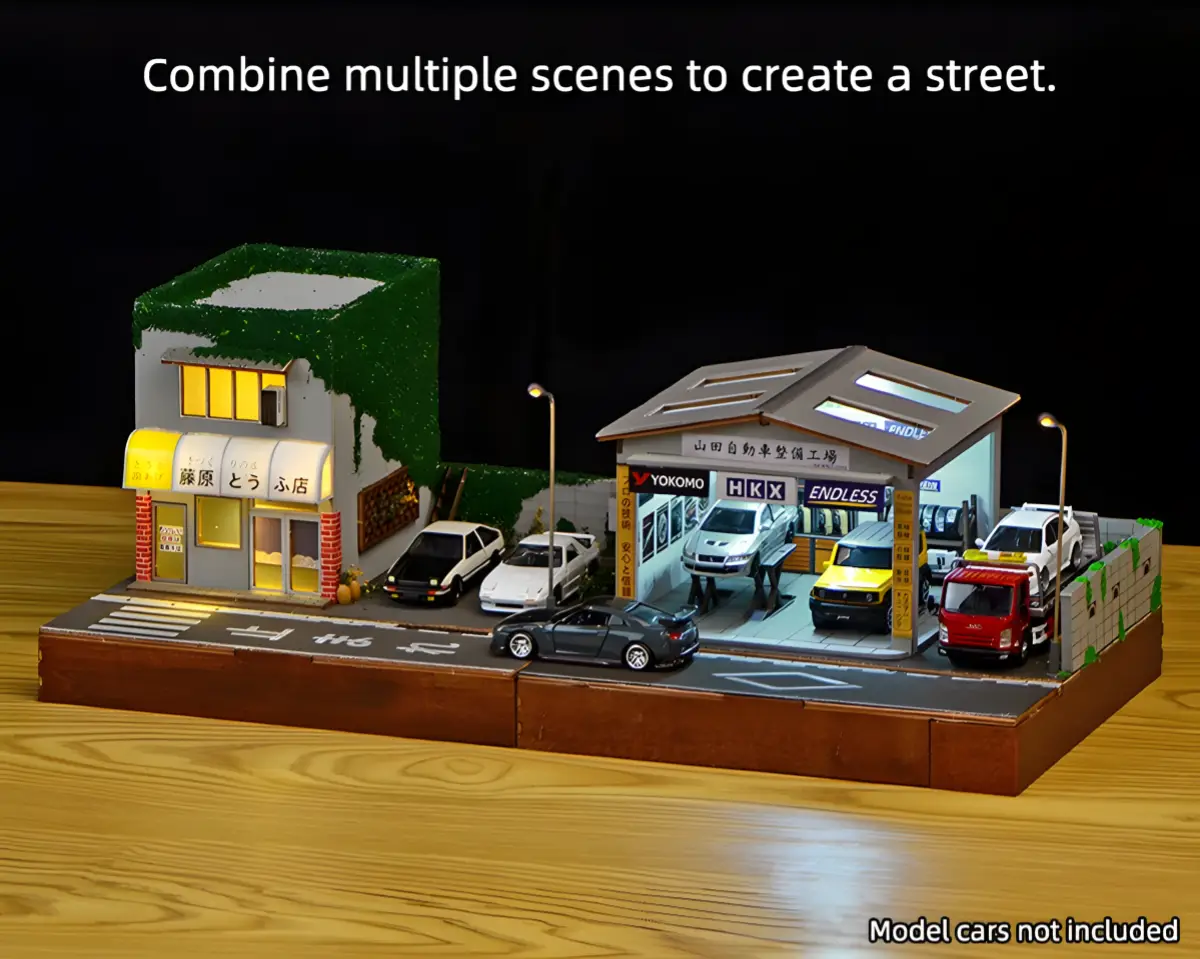
Modern neuroscience shows that building physical objects releases dopamine differently than digital rewards.
Not a spike, but a slow, satisfying accumulation.
We don’t just finish a project.
We finish a story — one that says:
“I brought something into existence that did not exist before.”
That is meaning — distilled.
4️⃣ The Need for Connection — Sharing Tiny Worlds, Building Belonging
The final psychological driver may be the most surprising:
Miniature worlds create social connection.
Not loud, performative connection — but quiet belonging.
When we share Book Nooks online, we are not saying:
“Look what I made.”
We are saying:
“Does anyone else feel what I feel?”
Thousands reply: yes.
This is why Book Nook communities have exploded worldwide.

Miniatures create soft identity groups—people who may never meet, yet feel deeply understood through shared craft.
And when someone comments “This reminds me of my childhood street,” or “This feels like a world I’d want to live in,”
we are reminded that:
Even the smallest worlds create bridges between very real humans.
📜 Miniatures Across History — Not a Trend, a Human Constant
Miniature worlds are not new.
From Egyptian tomb models, to Japanese bonsai landscapes, to European dollhouses, humans have always created scaled worlds they could hold in their hands.
Why?
Because miniature worlds allow us to do what full-scale life rarely permits:
✨ Observe without being observed
✨ Control without being overwhelmed
✨ Create meaning without needing perfection
Book Nooks are simply the modern chapter of a very ancient psychological story.
Why Book Nooks Specifically Work So Well
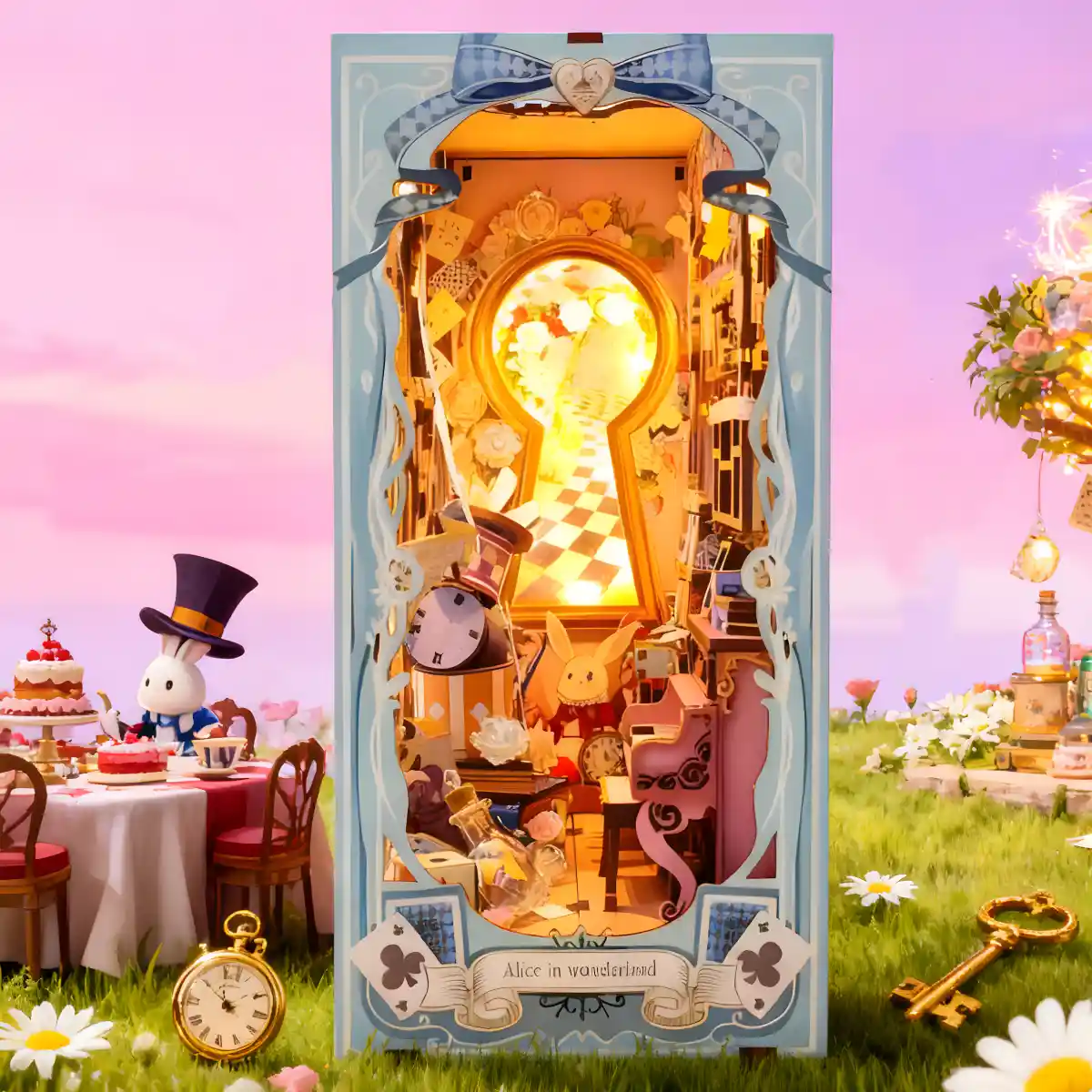
Among all miniature categories, Book Nooks are uniquely powerful because they are:
📚 Embedded in storytelling
They live between books — worlds inside worlds.
🌌 Visually immersive
You don’t just look at them — you look into them.
🪟 Portal-like
Every Book Nook is a doorway. Not a display.
This combination taps into imagination, memory, and aspiration simultaneously — a rare psychological trifecta.
This Is Why You Never “Outgrow” Miniatures
If you’ve ever heard someone say:
“Why do you like tiny things? That’s for kids.”
You now know the truth:
Loving miniature worlds is not childish.
It is deeply human.
Children love miniatures instinctively.
Adults love them consciously — as a way to hold onto meaning, identity, and agency when life becomes too large.

You did not outgrow miniatures.
You simply learned to understand them better.
Conclusion — Tiny Worlds, Big Psychology
Book Nooks are not only beautiful crafts.
They are psychological support structures built from wood and imagination.
They give us:
🧩 Control
🪞 Identity
✨ Meaning
🤝 Belonging
Every time you place a bookshelf light, glue a miniature book, or open a tiny window to a world that does not exist — you are doing something much bigger than assembling a kit.
You are participating in one of the oldest psychological rituals in human history:
Creating a world small enough to hold, yet deep enough to dream inside.
Want to explore more about the deeper world behind DIY Book Nooks?
These curated reads expand the psychological, emotional, and cultural layers of miniature crafting:
• Foundational Guide: The World of DIY Book Nooks — The definitive exploration of why book nooks matter in culture, psychology, and modern creative life.
• Emotional Perspective: Miniature Worlds as Self-Therapy: Why Crafting Book Nooks Heals Modern Anxiety — A psychological look at why tiny worlds calm the overloaded mind.
• Identity Perspective: DIY as Identity: How Book Nooks Express Who We Are — How creative micro-worlds become expressions of self.
• Family Perspective: Family Rituals in Miniature: Building Book Nooks Together — Why shared crafting becomes a meaningful bonding ritual.
Want to browse more creative kits and storytelling designs?
👉 Explore our complete Book Nooks Collection to discover your next miniature world.