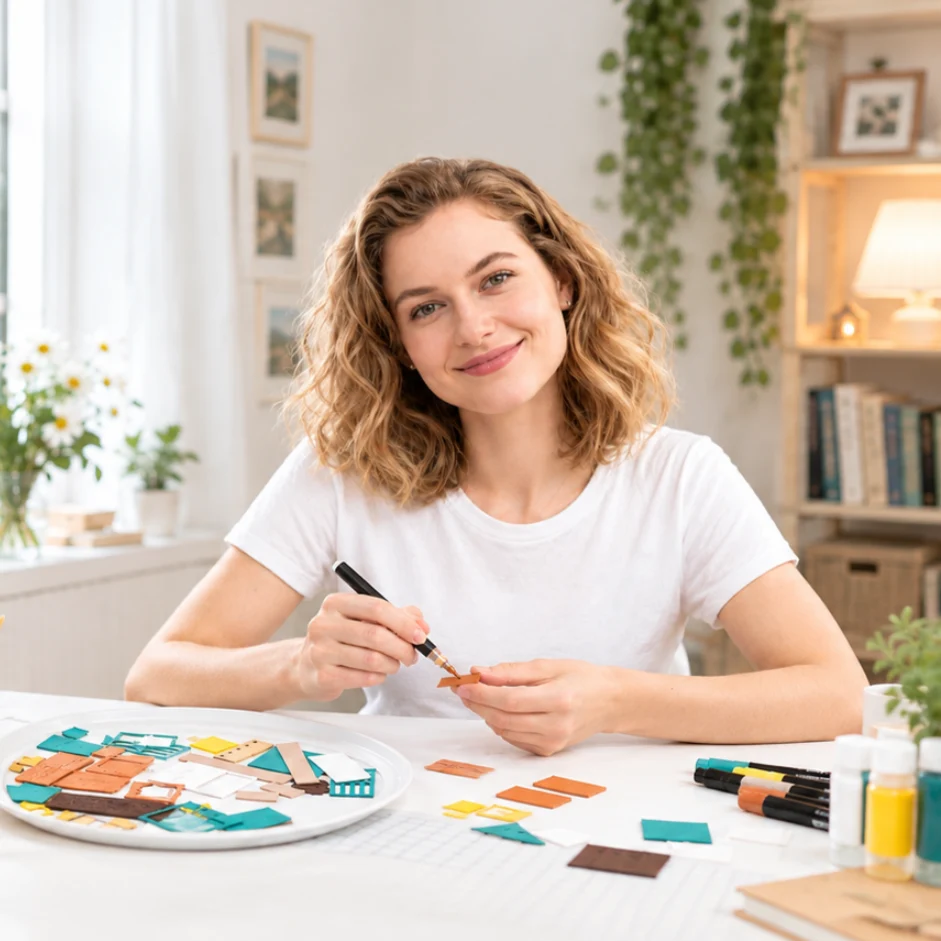
How to Paint a Book Nook Kit: Easy DIY Customization Tips
Simple ways to paint, customize, and transform a book nook into a miniature world that feels uniquely yours.

In a world that moves faster each year, many of us are rediscovering the quiet pleasure of slowing down. From analog journaling to weekend home rituals, people are turning toward hobbies that help them feel grounded and present.

DIY Book Nooks fit beautifully into this shift. These miniature worlds—glowing libraries, peaceful alleys, tiny cafés—give us something rare today: a pocket of unhurried time.
They invite us to sit still, focus on one small detail at a time, and feel the rhythm of creating with our own hands.
Book Nooks don’t just reflect slow living; they create it.
“Slow living” is no longer a niche aesthetic. It has become a conscious response to constant notifications, productivity pressure, and digital overwhelm.
At its core, slow living is about:
being present rather than rushing
choosing depth instead of speed
savoring instead of multitasking
letting small actions become meaningful

Crafting naturally aligns with this lifestyle. When your hands are busy with something tangible, your attention and emotions sync into a calmer rhythm. Book Nooks, because of their scale and detail, are especially suited to this gentle pace.
Book Nook building involves repetition, precision, and small, intentional steps. Cutting, gluing, fitting pieces together—these actions slow the mind and regulate attention.
This “structured slowness” is what makes Book Nook crafting deeply satisfying. You’re not rushing through tasks; you’re moving deliberately, feeling each stage unfold.
Most hobbies today happen on a screen. Book Nooks are refreshingly different.
Paper, wood, light components, textures—everything is physical.
Working with your hands removes you from digital noise and lets you enter an analog time zone where minutes feel fuller, quieter, and softer.
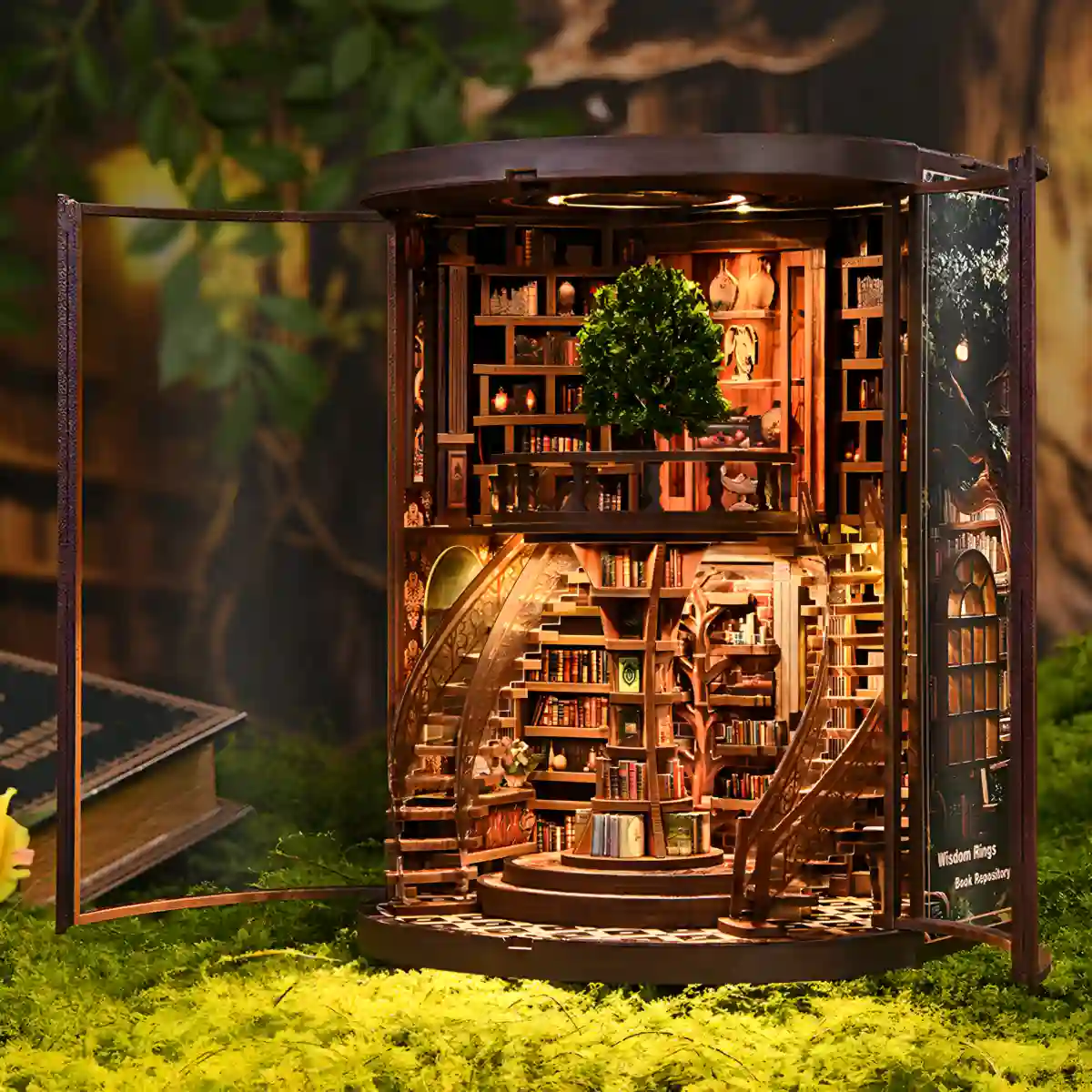
Miniature environments trigger a unique sense of calm. They make us feel cozy, safe, and slightly nostalgic.
When you build a quiet library or a dim-lit street, you’re not just assembling a scene—you’re creating a peaceful world that you can return to anytime.
These tiny spaces naturally embody stillness.
Stillness is not a lack of activity.
It’s a shift into a slower internal rhythm where your mind is relaxed but engaged.
Book Nook crafting fosters this state by requiring gentle focus and rewarding patience.
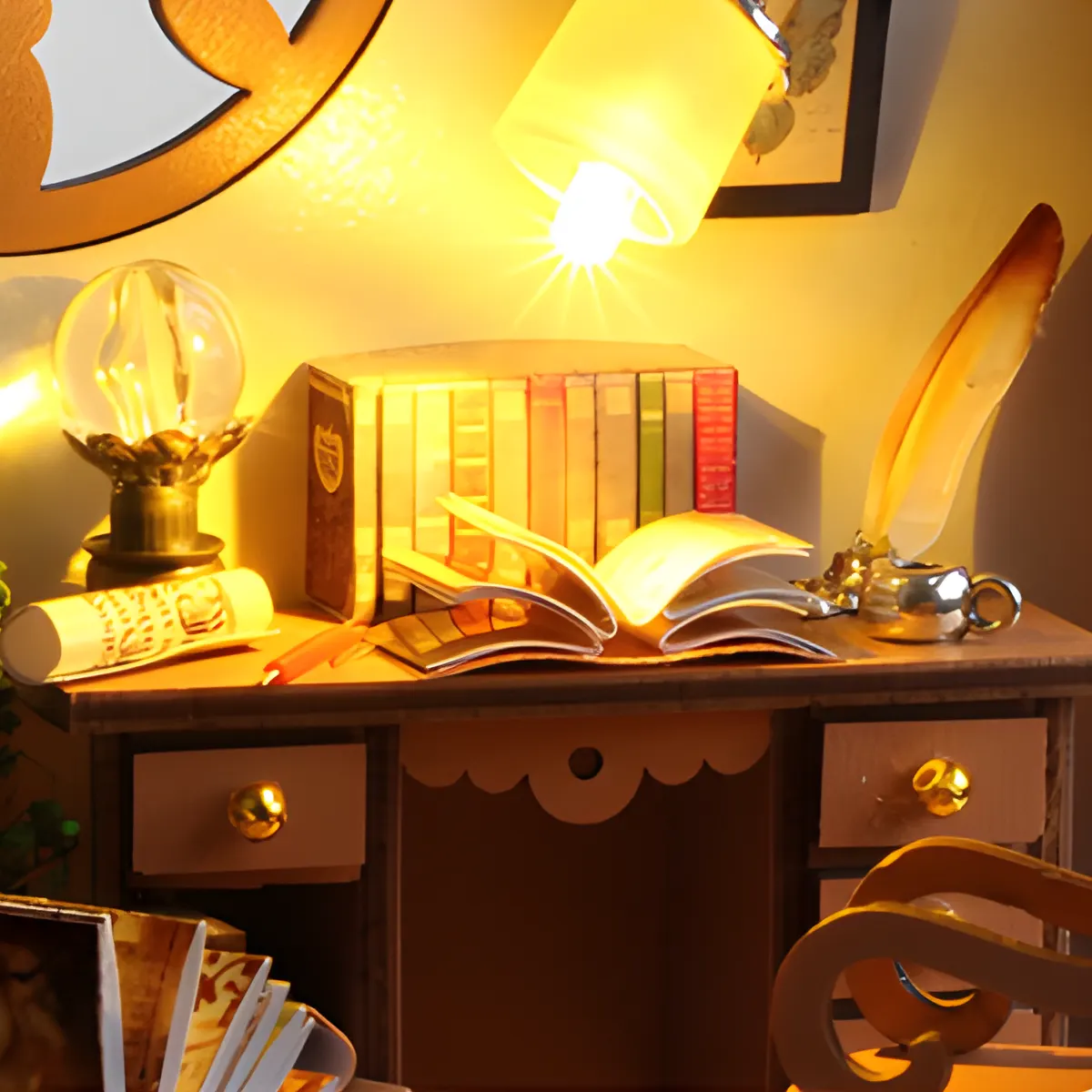
Light plays a major role here—warm, soft LEDs inside a miniature window instantly evoke calm.
Bookshelves, tiny stairs, hidden corners, lanterns—all the details visually communicate quietness.
A Book Nook is basically a “stillness generator” for your shelf.
This is where slow living turns into lifestyle.
Whether it’s:
a Sunday morning spent assembling a wall
a quiet evening gluing tiny signs
or a weekly hour dedicated to creative rest
Book Nooks help establish grounding rituals. Small routines become emotional anchors.
Imagine: sunlight filtering in, a warm drink beside you, and the gentle sound of materials being handled.
The first step of your Book Nook becomes a quiet invitation to start your weekend slowly.
Book Nooks are perfect for night rituals.
Their warm glow pairs naturally with low lights, soft music, or silence.
This becomes your moment to disconnect and reset.
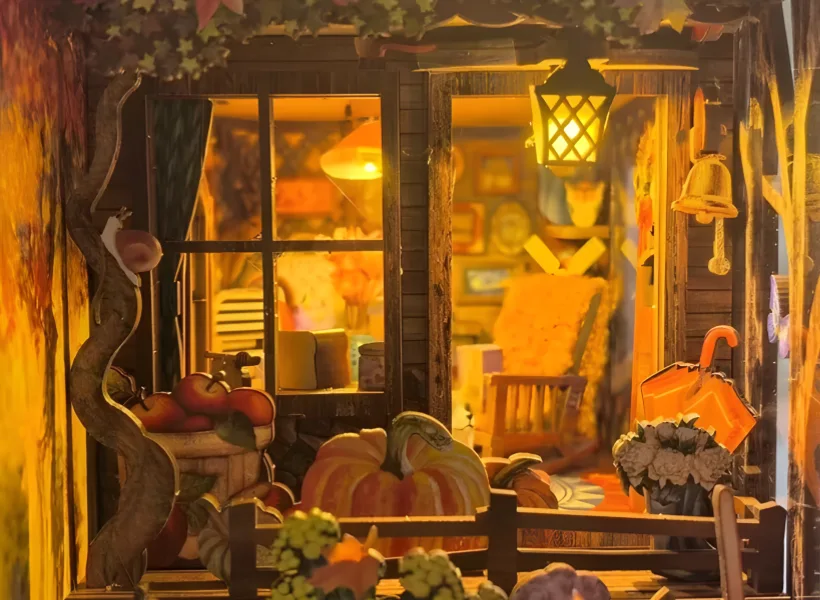
Crafting shifts with the seasons:
Autumn → cozy lamps, soft textures, warm colors
Winter → comforting indoor projects
Spring → fresh, imaginative themes
Book Nooks make seasonal slow living deeper and more intentional.
Here’s how anyone can transform Book Nook crafting into a meaningful routine:
Quiet library? Hidden alley? Serene garden?
Let the scene you choose guide the type of stillness you seek.
A small table, soft light, and a tray for materials is enough.
It doesn’t have to be long.
Even 30 minutes becomes powerful when repeated consistently.

Crafting together—without screens—is one of the purest slow-living experiences.
Book Nooks aren’t just hobbies.
They’re emotional containers.
They hold:
your time
your presence
your quiet moments
your creative energy
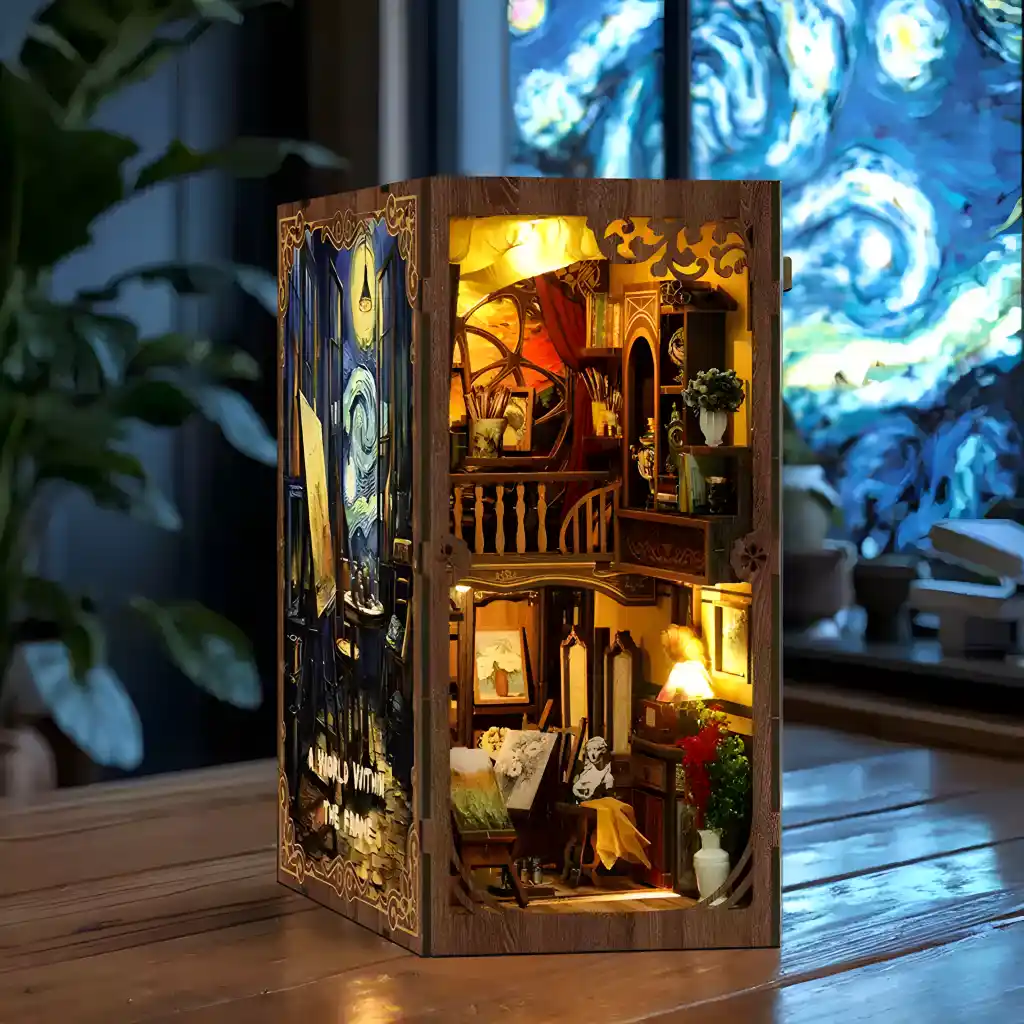
This is why people feel attached to the miniatures they build.
They’re physical evidence of moments when life slowed down and felt whole again.
If the slow living philosophy resonates with you, you may enjoy our other explorations of how miniature worlds connect to identity, meaning, and creativity:
For foundational insights on why Book Nooks matter culturally and psychologically, read the pillar essay:
And if you feel inspired to begin your own slow living ritual, explore our full Book Nook Collection, where each kit invites you into a different kind of stillness—one tiny moment at a time.
Simple ways to paint, customize, and transform a book nook into a miniature world that feels uniquely yours.

Looking for summer miniature kits? Explore beach Book Nooks, Mediterranean coastal scenes, tropical beach bars, and cozy European taverns for a little summer feeling on your bookshelf.